Tuesday, January 15, 2013

Life Under Water

by Richard Greenberg

Character Breakdown: 2 M, 3 F
  • Amy-Joy: Early twenties. Best friends with Amy-Beth. Occupied with looking after her cousins but looking for distractions.
  • Amy-Beth: Early twenties. Best friends with Amy-Joy. Recently out of a mental asylum for being vitaphobic, with the weight of impending adulthood on her shoulders.
  • Kip: Twenty-one or two. Ashamed of his rich father and overbearing mother, searching for a purpose in life and romantically.
  • Jinx: Forty-five. A doting single mother too Kip whilst looking for new love.
  • Hank: Forty-eight. A married business man searching for a new purpose in life and romantically.
Plot Summary:
A drama.

Various Locations on Long Island's southern fork. Summer.

Set near the sea front, in the Hampton’s, Kip leaves his mothers clutch and his Daddies money in order to try and make it on his own. On the way too making it on his own, by drunkenly trying to walk too New York, he stumbles upon Amy-Beth and Amy-Joy. Amy-Joy accepts Kip into her arms, literally, whilst reluctant best friend, Amy-Beth, looks on. Amy-Joy lets him stay at her Uncle's apartment, whilst he is away on business and she is looking after his scampering children, her cousins, Tristan and Isolde. Whilst Kip earns his keep by completing simple house chores, his Mother, Jinx, is busy in the arms of Hank, a married man, who amusingly recounts that an old college friend is now a gigolo. Meanwhile, Kip, the apple in Amy-Joy's eye, is busy trying to seduce the vitaphobic, unconfident and recently discharged from a mental asylum, Amy-Beth, into bed. It is whilst all three of them are supposed to be looking for Amy-Joy's devilish young cousins that Kip is able to get Amy-Beth on her own and kiss her, in the darkness, next to the water. Whilst in the meantime, Hank begins to feel 'uninnocent' for all the people that they are both hurting, including Kip, who had earlier returned to the house to collect more clothes, only to denounce the relationship as unromantic. Hank then affirms this by speaking of his detest towards tea roses, the flower that he had been constantly describing his new lovers hair as smelling like. After speaking wishfully with Amy-Beth of the future but realising that his may not be so bright, Kip turns to the warm bosom of Amy-Joy, who gladly indulges him, even making the first move. However, even when naked after having just been with Amy-Joy, Kip looks for the comfort of Amy-Beth and does so by kneeling at her side like an obedient dog. Nevertheless, Kip returns to his Mother's, now single again, bosom instead of dealing with the fall out due to his actions, leaving the girls to wave a frosty good-bye into the future at one another. It is eluded that Hank is now a gigolo by Jinx, who goes on to quiz Kip on his adventure down by the sea. Kip speaks of being involved with only Amy-Beth, not the 'pretty one', whilst the lights fade slowly on Amy-Beth, alone.

The Unseen

The Unseen by Craig Wright

Characters:
3 males: Wallace, Valdez, Smash (Smeija)

Drama.

This play tells the story of two men, Wallace and Valdez, who have been trapped in a prison for many years and tortured violently for reasons unknown to them. The two men have never seen each other, living in separate cells with a cell in between them. They have only each other for company, and discuss the possibilities of what might exist outside of their cells and outside of the prison altogether. Through their discussion, we discover Wallace to be an intellectual, far more educated than the dreamer, Valdez. Wallace constantly tinkers with a clock, timing his motions to the sound of the buzzers, a constant presence throughout the piece. Suddenly, Wallace has a realization, and divulges his plot of escape to Valdez, the first step being to convince one of the torturing guards, Smash, to let them out. When Smash enters, they try to reason with him to act as his friends, listening to the man's woes. Smash, however, will not tolerate their conversation today, as he has been reprimanded for talking to the prisoners, who he can't help but feel sorry for because of the pain he causes them. He explains how he wants to rip out their eyes and cut out their tongues, but even so, he would still know the pain he's causing them. Smash leaves, and Wallace's hopes are dashed. The first scene ends with a tapping sound coming from the cell in between the two prisoners that they had previously thought to be empty. In the second scene, Wallace wallows and tries to starve himself to death, while Valdez explains the plans of the woman (he assumes she is a woman) in the cell between them, which she communicates to him through a tapping language they have developed over the past 10 days between scenes. Valdez says that today things will change and a revolution will begin where they will be let free. Wallace points out that Valdez has no idea who this person is and that all of this language he is hearing is completely assumed from tapping. Finally, Smash comes in and opens the doors of the two prisoners, letting them go free. He explains that, while torturing another prisoner that day, he couldn't take it and ripped the man's eyes out. When the man screamed, he ripped out his tongue. Still the man made noise so he smashed his vocal box, and when he couldn't take the knowing of this man's suffering, he lit him on fire. With this collapse of the system, Smash was letting them free to leave the prison, only after admitting it had been he who had been tapping on Valdez's wall in order to get him back for getting him in trouble. After some time, Wallace and Valdez leave their cells together.

Here We Are: Dorothy Parker

DRAMA 83 BLOG

"Here We Are" - A comedic One Act by Dorothy Parker

Characters
HE: played by a man (middle 20s-middle 30s)
SHE: played by a woman (Early 20s-early 30s)

    "Here We Are" takes place on a train. The newly married couple, simply called He and She, are on their way to their honeymoon in New York. There is an awkward air around the couple, it is clear they have not consumated their marriage. Though it is subtly implied, HE is eager to get "everything done," but SHE, being an uncomfortable bride, discusses the wedding instead. One main argument they have is about SHE's ex-suitor Joe Brooks. Though HE becomes jealous and they have an argument, in the end love prevails and HE and SHE discuss the beginning of their new life together ending by saying, "yes, here we are."


Monday, January 14, 2013

Teeth by Tina Howe (A unique comedy...I think it's a comedy)

The one-act is about this dentist, Dr. Rose, who has a fixation with a maestro named Glenn Gould and unprofessionally asks the opinion of his patient, Amy, (Any whovians out there?) while replacing a filling that has been taken out by eating taffy. The radio is playing a tribute to Bach for the duration of the day.Into the play, Dr. Rose struggles to the point of infantile failure trying to open a bottle of filling cement while Amy pontificates about her reoccurring dream that she has about her teeth being destroyed in her mouth. Finally the scene ends with Amy helping Dr. Rose open the bottle with her teeth, which she is rebuffed for doing and they black out while singing the next song that plays.

A Man for Dr. Rose
A girl for Amy.
Both should look middle age but Dr. Rose is just a bit older and more disheveled.


Sunday, January 13, 2013

THE BAY AT NICE by David Hare


CHARACTER BREAKDOWN: 2F, 2M
Valentina Nrovka – A vivacious woman, “probably in her sixties, but it is hard to tell.” Self-absorbed, over-the-top, and in control. Often speaks with a patronizing tone. Has a soft spot for Paris.
Sophia Yepileva – Valentina’s daughter, thirty-six years old. Delicate, anxious, and self-effacing. A dependable doormat, for the first time, Sophia is trying to be stand up for herself against her harsh mother.  
Assistant Curator – In his mid-thirties. A weak, nervous man who works at the Leningrad Art Museum.  An academician. Greatly intimidated by Valentina and Sophia.
Peter Linitsky – Sixty-two years old, balding, and the gentle lover of Sophia. Constantly seeking Sophia’s approval. “His manner is apologetic.”

PLOT SUMMARY:
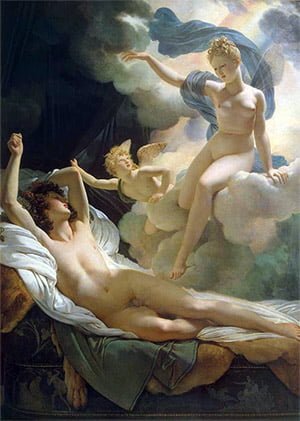
Setting: A large room in the Hermitage Art Museum in Leningrad 1956. Late afternoon. GuĂ©rin’s painting Morpheus and Iris is on display on the back wall. Tables and red plush hard chairs are pushed aside.

A drama. 

     The elderly yet energetic Valentina Nrovka is summoned by the Hermitage Art Museum in Leningrad to confirm the authenticity of a painting – The Bay of Nice - attributed to the famous artist (and her old art teacher) Matisse. Her nervous daughter Sophia Yepileva accompanies her to the museum, and uses the outing to speak seriously with her mother. Overcoming her self-effacing manner, Yepileva confesses that she wishes to leave her husband Grigor and marry an ambitionless but kind older man, Peter Linitsky. Remembering her past as a selfish bohemian art student in Paris, Nrovka attempts to convince Yepileva that she shouldn’t drastically change her life in search of indulgence, freedom, and self-actualization. Nrovka explains that Yepileva would ruin her husband’s influence as a member of the Party through divorce, and likely, Yepileva would not feel complete by marrying this boring man twice her age and socially beneath her. Eventually, however, Nrovka relents and agrees to financially support her daughter, and reveals to the Assitant Curator that the painting is, in fact, a Matisse.

Saturday, January 12, 2013

Clarisse and Larmon by Deb Margolin


CHARACTER BREAKDOWN: 2M, 1F
Clarisse: Middle-aged. Wife to Larmon. A simple woman who learns of her son's untimely demise.
Larmon: Middle-aged. Husband to Clarisse. A simple man who learns of his son's untimely demise.
Soldier: A young man given the task of returning the remains of a young soldier.

PLOT SUMMARY:
Setting: A small green room, not unlike an interrogation room. In the center sits a nondescript wooden table.

A comedy.

Clarisse and Larmon sit side by side staring at a picture provided by the soldier. The photo is of a leg: all that remains of their son. Once the soldier is gone the couple discuss there son and all the things he used to do with his leg. This spirals into a discussion of verbs named after body parts, a deal in which Larmon will pay Clarisse $100 for every true things she says about her son, and resolving in Clarisse shoving the photo of her sons leg into her underwear to "return him back to where he came from."

Absurd. But has some potential for a few good laughs.

Friday, January 11, 2013

HANDS ACROSS THE SEA by Noel Coward (A comedy)


CHARACTER BREAKDOWN: 4F, 5M
Lady Maureen Gilpin: "Piggie". She is an eccentric woman with a large circle of friends and          
          acquaintances whom she attempts to stay connected with at all times. She is in her 30's.
Peter Gilpin: Piggie's husban. He "Reeks of the navy" and is preparing to be shipped off to sea in
          the coming days.
Walters: A Parlor maid of the Gilpin's residence.
Alastair Corbett: "Ally". A fellow naval man.
Mr. Fred Wadhurst: He is a middle-aged man who follows his wife where ever she goes with no
          degree of disapproval. A house guest.
Mrs. Wadhurt: A nervous, middle-aged woman visiting the Gilpin's on her way to the theater with
          her husband.
Mr. Burnham: A quiet young man who stops by the Gilpin's home. He is overshadowed by the chaos.
Claire Wedderburn: A well-dressed, middle-aged woman who knows what she wants and isn't afraid
          to voice what's on her mind.
"Bogey" Gosling: A Major in the Marines, in his 30's.


PLOT SUMMARY:
Setting: Drawing room of the Gilpin's flat in London. 6pm.

          The entirety of this one-act occurs in the parlor room of the Gilpin's home. Piggie, an avid traveler and socialite, is constantly entertaining people -- she never rests, which soon becomes confusing and, perhaps, chaotic. A phone continues to ring as the room begins to fill up with more and more guests, forcing Piggie to attend to both the people in her home and the people on the receiver. This play's relevance lies in the idea that we can not give our undivided attention in a world where we are connected to everyone. The comedy lies in the chaos and Piggie's inability to recall who is who.